

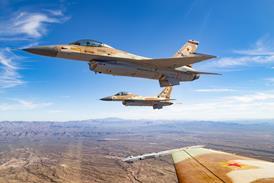













The Australian Department of Defence has launched a formal market survey for its Project Air 6000 future fighter programme, and has revealed it is looking at leasing new combat aircraft. Contracts for an initial tranche of aircraft could be signed as early as the end of 2007.
The survey, released internationally last week, also shows that the Royal Australian Air Force has taken nearly 10 years off the project's time-frame, bringing forward the final phase of a proposed three- "block" purchase by 12 years to end in 2018.
The survey seeks aerospace industry input into the development of the RAAF's future airborne- combat and long-range strike capabilities. The survey calls for data on costings, force mix options, and sources of risk as the RAAF moves towards replacing its existing Boeing F/A-18A/B and General Dynamics F-111C/G fleets.
The survey iterates plans to spread costs over a number of years. The initial acquisition is planned for inclusion in the 2006 defence budget. The survey reveals that an estimated expenditure of $A6 billion ($3.1 billion) has already been factored into long-term defence financing plans to support this purchase. The lead aircraft would enter RAAF service by 2012, ahead of the initial retirement of F/A-18s and F-111s.
A second block purchase is due to begin in 2010, with aircraft to be delivered by 2015. The market survey says that indicative costs are placed at between A$4.5 billion and A$6 billion.
For the first time the survey provides costing estimates for the proposed third-block purchase, with estimates at between A$3.5 billion and A$4.5 billion. Block-3 purchases would commence in 2012 with deliveries completed by 2017-2018. Prior to the survey, the most recent data released by the RAAF indicated the final acquisition would start in 2022-2023, and be completed in 2030.
The survey calls for industry to make assessments of the potential impact of unmanned combat air vehicles in the Asia-Pacific region and how Australia could counter such weapons if introduced into service by other nations.
The paper asks for industry analysis on leasing new fighters as a mechanism to support the project, and also flags the option of using private financing if appropriate for the development of some force element options.
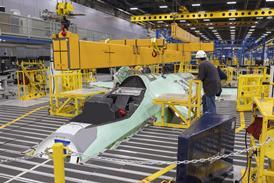
The survey also seeks input on what options exist for Australia to participate in collaborative procurement arrangements with other nations for new fighters, indicating it is still prepared to consider joining programmes such as the Joint Strike Fighter.
Source: Flight International